|
|
|
More suggestions
|
|||
|
|||
|
Tags:
|
Español
On this video you can see the reflexive pronouns in English.
Read the explanations to know how to use them.
En este vídeo tienes los pronombres reflexivos del inglés. Lee las explicaciones para saber cómo se usan.
MYSELF = yo mismo, me
YOURSELF = tú mismo, te
HIMSELF = él mismo, se
HERSELF = ella misma, se
ITSELF = ello mismo, se
OURSELVES = nosotros mismos, nos
YOURSELVES = vosotros mismos, os
THEMSELVES = ellos mismos, se
Estos pronombres ingleses se usan para dos cosas.
PRONOMBRES REFLEXIVOS
Cuando el sujeto y el objeto son la misma persona:
I cut my finger = Yo me corté un dedo
Sujeto= yo / Objeto= un dedo
I cut myself = Yo me corté
Sujeto= yo / Objeto= yo
Cuando son reflexivos, en español es posible añadir la frase "a sí mismo":
- Me corté a mí mismo = I cut myself
- Nos alimentamos a nosotros mismos = we feed ourselves
- She painted herself = ella se pintó (a sí misma)
CUIDADO
En español están los llamados "verbos pronominales", que se construyen igual que los reflexivos pero con ellos los reflexivos no significan nada. No los traduzcas en inglés por reflexivos:
reflexivo
El niño ya se lava solito = The boy can already wash himself. (sujeto = el niño, objeto = el niño)
pronominal
Yo me lavo la cara = I wash my face. (sujeto = yo, objeto = my face).
Más verbos pronominales:
- Me levanto a las 8 = I get up at 8
- Me parece que es tarde = I think it's late
- Ella se sent aquí = She sat here
RECÍPROCOS
Otro error habitual de los hispanohablantes cuando hablan inglés es confundir el reflexivo de nosotros con el recíproco.
Reflexivo
el sujeto y el objeto son la misma persona:
1- We looked at ourselves in the mirror = nos miramos en el espejo (yo me miré a mí mismo y tú te miraste a ti mismo)
2- We looked at each other for two minutes = nos miramos durante dos minutos (yo te miré a ti y tú me miraste a mí)
Para no confundir ambas cosas hay que ver si podemos añadir "a nosotros mismo" (reflexivo) o "el uno al otro" (recíproco):
1- nos miramos a nosotros mismos en el espejo (reflexivo)
2- nos miramos el uno al otro durante dos minutos (recíproco)
PRONOMBRES ENFÁTICOS
Se utilizan para enfatizar el sujeto, para darle importancia o realzar la importancia que tiene. Significa "yo, y nadie más que yo", etc.
- I did it myself = lo he hecho yo solito
- It is cheaper if you do it yourself = es más barato si lo haces tú mismo
- The king himself came to the concert = el rey en persona vino al concierto.
- Julia Roberts herself was there! = la mismísima Julia Roberts estaba allí.
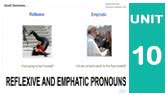
Report mistakesMYSELF, etc. are pronouns that can be reflexive or emphatic.
REFLEXIVE PRONOUNS
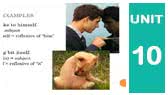
When the subject and the object of the sentence are the same, we use these pronouns for the object.
John is washing the car
Subject (who washes the car?) = John
Object (what does he wash?) = the car
John is washing his face
Subject = John / Object = his face
John is washing himself
Subject = John / Object = John
I saw a cat in the window
S = I / O = a cat
I saw myself in the mirror
S = I / O = I
She cut a piece of paper
She cut her finger
She cut herself when she was cooking
EMPHATIC PRONOUNS
We can also use these pronouns to emphasize the subject, because the subject is important, or because you think it is important that the subject did it with no help.
I repaired the car myself
no help. I did it, not a professional, it was me, ME, I feel very proud!
The queen herself came to my house!
It was a very important visit, the queen!
It's cheaper if you do it yourself
It's cheaper if you do it, not another person, but you, you alone, with no help.
Julia Roberts herself was there
She's an important person (famous), and she was there.