Multimedia-English: Learn Real English, Prepare for Real Life
Home About Contact Phonetics Links Info Facebook Users Open Section Home
Advanced
HOME » BEGINNERS » Basic Real English » Unit 5 » Lesson J
« Back
 
Rating: *****   Add to Favourites          Share Easy reader:    PRINT: Print       
5-J) Have    Time: 1:26    Accent: e Dictionary    Sound BrE    Explanations

5-J) Have


More suggestions
Tags:
  • Description
  • ES Español
  • +More

Description

We use the verb HAVE to express possession.

Español

El verbo TENER se puede decir en inglés de 3 formas:
1- have (se usa mucho en inglés americano y en inglés británico escrito)
2- have got (se usa mucho en inglés británico hablado)
3- got (se usa sólo en el inglés coloquial, sobre todo en EEUU)

En el cuadro de texto tienes la conjugación de las tres formas.

El verbo GOT debes ser capaz de entenderlo pero no hace falta que aprendas a usarlo. Como se usa principalmente en EEUU, donde suena parecido a "gat". La frase "I got a book" (=tengo un libro) suena allí parecido a "ai gara buk" (en Inglaterra se usa menos y suena así como "ai gota buk" o "ai gora buk").
I got a book / I ain't got a book / you got a book?


El verbo HAVE es un verbo normal y por tanto utiliza el auxiliar DO para negar y preguntar. El verbo HAVE GOT es un verbo especial, y por tanto no usa el DO para nada, todo lo hace solito, así que niega solo y hace la inversión de las preguntas solo (la partícula "got" no varía ni se mueve).

yo tengo un libro = I have a book / I've got a book
yo no tengo un libro = I don't have a book / I haven't got a book
¿tienes un libro? = do you have a book? / have you got a book?


Imprimir: Imprimir datos
 

Links

CLICK
AmE 1- The verb HAVE (theory)


CLICK
BrE 2- HAVE GOT: forms


CLICK
BrE 3- I haven't got you anything this Christmas (song)


CLICK
AmE 4- I got strong teeth


CLICK
BrE 5- Back for good (song)


CLICK
AmE 6- I like dogs (I got two)


CLICK
AmE 7- What do you have in your bag?


CLICK
AmE 8- We ain't got a cake for the birthday party


  • Explanations
  • Error Report mistakes

Explanations

HAVE = HAVE GOT = GOT

HAVE is more normal in American English and written British English
HAVE GOT is more normal in conversational British English
GOT is only used in colloquial English, especially in America

HAVE (normal verb, uses "do")
Affirmative

I have a pen
You have a pen
She has a pen, He has a pen, It has a pen
We / You / They have a pen

Negative

I do not have a pen = I don't have a pen
You do not have a pen = You don't have a pen
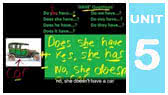
He does not have a pen = He doesn't have a pen
We / You / They do not have a pen = We / You / They don't have a pen

Questions

Do I have a pen?
Do you have a pen?
Does he/she/it have a pen?
Do we/you/they have a pen?

HAVE GOT (special verb, doesn't need "do")

I have got a pen = I've got a pen
he has got a pen = he's got a pen

I have not got a pen = I haven't got a pen
He has not got a pen = he hasn't got a pen

Have you got a pen?
Has he got a pen?

GOT (colloquial)

I got a pen
you/we/they got a pen
he's got a pen

negative:
I haven't got a pen / I ain't got a pen
he hasn't got a pen / he ain't got a pen, etc.
(ain´t is the colloquial AmE form for the negative of "to be" or "to have")

question:
you got a pen? / he got a pen?

Please log in to enter a dedication or register as a user.

Please log in to do a report or register as a user.

Post your comment: click here to write.

 
  • Users
  • Teachers can enter suggestions for class exploitation