|
|
|
More suggestions
|
|||
|
|||
|
Tags:
|
Español
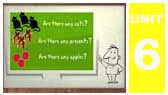
Learn some very important grammatical words: some/any, much/many, a lot of, little/few. Watch the video and read the explanations.
SUSTANTIVOS CONTABLES E INCONTABLES
Los sustantivos (nouns) pueden ser contables o incontables.
Contables son las palabras que se pueden contar y por tanto tienen singular y plural:
CONTABLE= libro (un libro, dos libros), niño (un niño, dos niños)
Incontables son las palabras que no se pueden contar, y por tanto no tienen plural:
INCONTABLE= aire (no se puede decir "en esta habitación hay cinco aires", se diría que hay mucho o hay poco). Leche, arroz, agua, pasta, paz, alegría, amor
Cuidado, hablamos de palabras, no conceptos. Por ejemplo, el dinero se puede contar, pero no contamos la palabra "dinero" (no se dice "tengo cinco dineros" sino "tengo mucho/poco dinero" o "tengo cinco euros", porque "euro" sí es una palabra contable)
A veces una palabra se puede usar de las dos maneras:
CONTABLE= En este vaso hay cerveza (mucha o poca cerveza)
INCONTABLE= Me bebí dos cervezas (te refieres en realidad a "dos botellas de cerveza")
Pero normalemente necesitamos usar otra palabra para hacerlo contable:
INCONTABLE= Me gusta el arroz. En este plato hay arroz
CONTABLE= En este plato hay diez granos de arroz (contamos los granos, no el arroz)
CONTABLE= Puedo beberme 20 vasos de agua o dos litros de agua (contamos los vasos o los litros, no el agua)
SOME/ANY
Estas palabras son partitivos, pero para simplificar podemos considerarlas como el plural del artículo indefinido (A/AN):
Tengo un libro = I have a book
Tengo unos libros = I have some books (pero también se puede decir "I have books")
INCONTABLES
Los incontables no tienen plural. Hemos visto anteriormente que los incontables no usan el artículo indefinido (A/AN), pues bien, si queremos podemos usar aquí también el SOME:
- I have water = I have some water (tengo agua, tengo algo de agua)
Usamos SOME en la oraciones afirmativas y ANY en las negativas e interrogativas:
- I have water = tengo agua
- I have some water = tengo algo de agua
- I don't have any water = no tengo agua, no tengo nada de agua
- Do you have some water? = ¿tienes algo de agua?
En español se suele traducir por "algo de" (o "algunos"), "unos", "unos pocos" o por nada:
- I have some books = tengo libros. Tengo unos libros. Tengo algunos libros. Tengo unos pocos libros.
- I have some water = tengo agua. Tengo algo de agua. Tengo un poco de agua.
- I don't have some books = no tengo libros. No tengo ningún libro
- Do you have any water? = ¿tienes agua? ¿tienes algo de agua? ¿tienes un poco de agua?
Sólo podemos usar SOME/ANY cuando el número o la cantidad es pequeña e indefinida:
- I have some books at home = tengo unos cuantos libros en casa (si tuviera muchísimos no podría usar SOME, diría "I have books")
- tienes unos ojos (muy) bonitos = you've got beautiful eyes (no se puede decir "you've got some beautiful eyes" porque eso sería "tienes unos cuantos ojos bonitos", y todos sabemos que tienes, como mucho, dos, así que no es una cantidad indefinida)
MUCH/MANY, A LOT OF (= mucho/muchos, un montón de)
Estas tres formas significan MUCHO. Para simplificar digamos que MUCH (mucho) y MANY (muchos) se usan en unas situaciones sí y en otras no, así que lo más sencillo es usar siempre A LOT OF, que vale para todas las situaciones y así no metes la pata.
Cuidado con un error muy común entre los hispanohablantes. No se puede decir:
- Tengo muchos = I have a lot of
Eso significaría literalmente "tengo un montón de".
Hay que decir "tengo un montón", o sea, I HAVE A LOT
El "of" sólo lo ponemos si va seguido de algo:
- I have a lot of books = tengo muchos libros (tengo un montón de libros)
A FEW / A LITTLE
A FEW (contables)
unos pocos
I have few friends in that city = tengo unos cuantos amigos en esa ciudad.
A LITTLE (icontables)
un poco
I need a little salt = necesito un poco de sal.
Ahora léete las explicaciones en inglés que hay en la casilla de EXPLANATIONS, así vas practicando también la lectura.

1- Some and Any (and compounds)
2- Countable / Uncountable nouns: video
3- Countable / Uncountable nouns: examples
5- Some / Any
video by Oxford University Press (you need Real Player in your computer)
Report mistakesCOUNTABLE / UNCOUNTABLE NOUNS
Nouns can be countable (we can say: one, two, three) or uncountable (they have no plural):
COUNTABLE: table (1 table, 2 tables), boy (1 boy, 2 boys), house (1 house, 2 houses), phone (1 phone, 2 phones)
UNCOUNTABLE: milk (two milks), money (two moneys), spaghetti, rice, air, water, wine, beer, food, piece, freedom, love
Sometimes a word can be countable or uncountable:
- I drink beer (uncountable)
- Can I have two beers, please? (= two glasses of beer)
But usually we need another word to make it countable:
- I like rice
- There are ten grains of rice in the plate (we count the grains, not the rice)
- I can drink 20 glasses of water or two litres of water
SOME/ANY
We can consider these the plural of the indefinite article, so we have:
UNDEFINITE ARTICLE
singular
A/AN
I have a book
plural
SOME/ANY
I have some books (we can also say: "I have books", but it is more usual to say "some")
UNCOUNTABLE NOUNS
They have no plural, so we will talk about the singular only.
Remember that words that have no plural can't use the article A/AN:
- I have a book (1 book, 2 books)
- I have water (1 water, 2 waters)
These nouns can't use A/AN but they can use SOME/ANY (and they usually use it):
- I have some water
So the rule is:
Definite article
We use it with singular nouns, plural nouns, countable nouns and uncountable nouns
Indefinite article ![]()
Countable nouns: singular (A/AN), plural (nothing or SOME)
Uncountable nouns: singular (SOME) (they have no plural)
With negatives and interrogatives we use ANY:
- I have some water
- I don't have any water
- Do you have any water?
We can only use SOME/ANY when the number or amount is small and indefinite:
- I have some books at home (maybe 10 or 30)
- In the National Library there are books (maybe 10,000): some = a few
- You've got beautiful eyes (not: "some beautiful eyes" because we know you have two eyes, not "a few eyes")
MUCH/MANY, A LOT OF
COUNTABLE NOUNS (C)
MANY
UNCOUNTABLE NOUNS (U)
MUCH
COUNTABLE / UNCOUNTABLE NOUNS
A LOT OF
C- I have many books
U- I don't have much money
C/U- I have a lot of books. I don't have a lot of money
MUCH/MANY
negative and interrogative sentences
A LOT OF
affirmative, negative and interrogative sentences
+ I have a lot of books. I have a lot of money
- I don't have many books. I don't have a lot of books
- I don't have much money. I don't have a lot of money
? Do you have many books? Do you have a lot of books?
? Do you have much money? Do you have a lot of money
You can also use MANY in affirmatives (I have many friends) but not usually.
CONCLUSION: You can always use A LOT OF (but be careful if you want to use MUCH or MANY)
A FEW / A LITTLE
COUNTABLE NOUNS (C)
A FEW
UNCOUNTABLE NOUNS (U)
A LITTLE
C- I have a few books
U- I have a little money
You can dedicate this video to a person and write a message for them here. Your dedication will be visible for one month.