Click on a word and I’ll read it
Or select some text and then click on play.
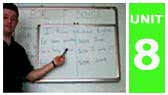
Watch this video, read the explanations and then watch the rest of the videos in this lesson.
USED TO
We use this verb to talk about a past habit that finished, it doesn't happen in the present:
- I used to play football when I was a child but now I never play football because I don't like it anymore.
- She didn't use to get up early but now she gets up at 7 o'clock everyday.
- Did he use to drink a lot? - Yes, he used to drink a lot but now he only drinks a glass of wine with meals.
STILL
We use this preposition to talk about something that started in the past but hasn't finished, it is happening in the present too:
- He started to dance at 9 o'clock and he's still dancing!
- We still live in London. We arrived here in 2005 and we are still living here.
ANYMORE
We use this with negative sentences to emphasize that something was true in the past but not now:
- I loved Susan when I was at university but I don't like her anymore.
- He used to be very rude, but now he's not rude anymore, he's very nice.
Here are some more prepositions commonly used with the past tense.
FROM... TO...
We use these prepositions to express the beginning and the end of an action  I work from 8:00 to 3:00 every day
FOR vs AGO
We use FOR to express the duration of an action I worked for 3 hours
We use AGO to express the time passed from the end of the action to the present I saw your sister an hour ago
The phrase with AGO goes at the end of the sentence I met her 5 years ago (not: I met her ago 5 years)
5:00 it starts raining (the verbs "start" and "stop" are followed by -ing)
6:00 Kevin comes to visit you
7:00 it stops raining
Now it is 9 o'clock
Everything is wet because it was raining 2 hours ago. I think it started raining at 5 o'clock and it stopped raining at 7. Yes, it rained from 5 to 7. It was raining for two hours. Oh, and Kevin came to visit you at 6 o'clock, 3 hours ago.
FOR vs SINCE
We use FOR to express the duration of an action I've studied English for 2 years
We use SINCE to say when the action began I've studied English since 2007
- Now it is April, I came to live here in February, so I've lived here for 3 months, since the 3rd of February.
FOR vs DURING
We use DURING (or IN) to say when something happened My father was in hospital during the summer
(= My father was in hospital in the summer)
We use FOR to say how long something lasts My father was in hospital for two weeks
- It rained during the night for two or three hours.
- She came to see me for five minutes during the night.
All these prepositions are also used with other tenses (present, past and future), but AGO is only used with the past tense.

 AGO: listening dictation

More videos from this lesson