Click on a word and I’ll read it
Or select some text and then click on play.
English is a global language, for that reason, no matter what variety of English you're studying, you must be able to understand any other variety of English as well. And since English is definitely the lingua franca used in most of the world, you should also be able to understand people speaking English with a foreign accent (as long as it is not too strong). Since this website wants to prepare you for real life, we're also offering you material in all the varieties of English, including some with a foreign accent.
Fortunately, all the varieties of English can be grouped in just two branches:
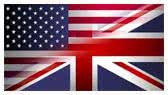
1- British English (Europe, Asia, Africa, Oceania, Caribbean)  marked as BrE or with the flag
2- American English (USA, Canada, Philippines) marked as AmE or with the flag 
If we want to be more specific we will also mention the country, for example:
(Australia) refers to the variety of British English spoken in Australia.
If the speaker is not a native English speaker, we use the same convention:
(Spain) referring to a person from Spain who speaks good British English.
The symbol  means "foreign accent", and we can also specify:
(Spanish) means a person with a strong Spanish accent (from Spain or from any other Spanish speaking country).
 American or/and British English. We use this mixed flag in three different situations:
1- It's impossible to tell what variety of English they're using, it might be either.
2- There are different people using different accents, so both varieties appear on the video.
3- It's a foreigner speaking good English but half-way between English and American accent.
American black English marked as: Black
This is a special case because much of the black population of the United States, for historical reasons, speak a different dialect with a different pronunciation, vocabulary and even grammar. The deviation from standard AmE is sometimes very little, but sometimes so strong that most people can't understand them. So if it's a black (or even white) person speaking this variety of English (also called "Ebonics") we mark it like that. This only happens in the USA, in Britain, black people don't speak differently.

Info